

Surfacing in
Guildford
Period homes off the Hog's Back, new builds around the A3 corridor.
See work in Guildford→We will beat ANY like for like quotation. Contact us for more information.
Surfacing in Woking
Hot-laid tarmacadam for long, hard-wearing driveways. — for Woking homeowners and properties.
 BeforeAfter
Before & after
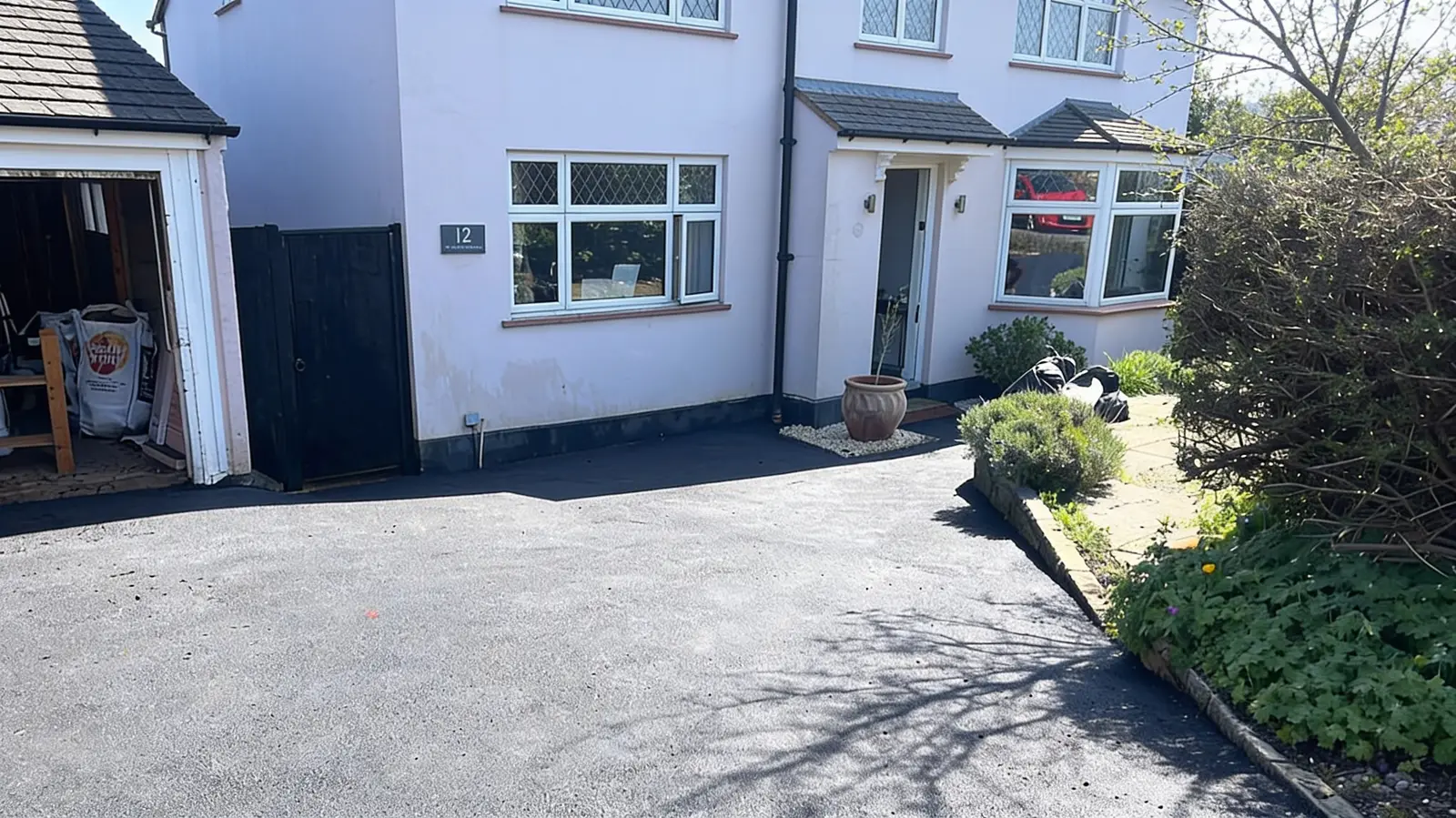
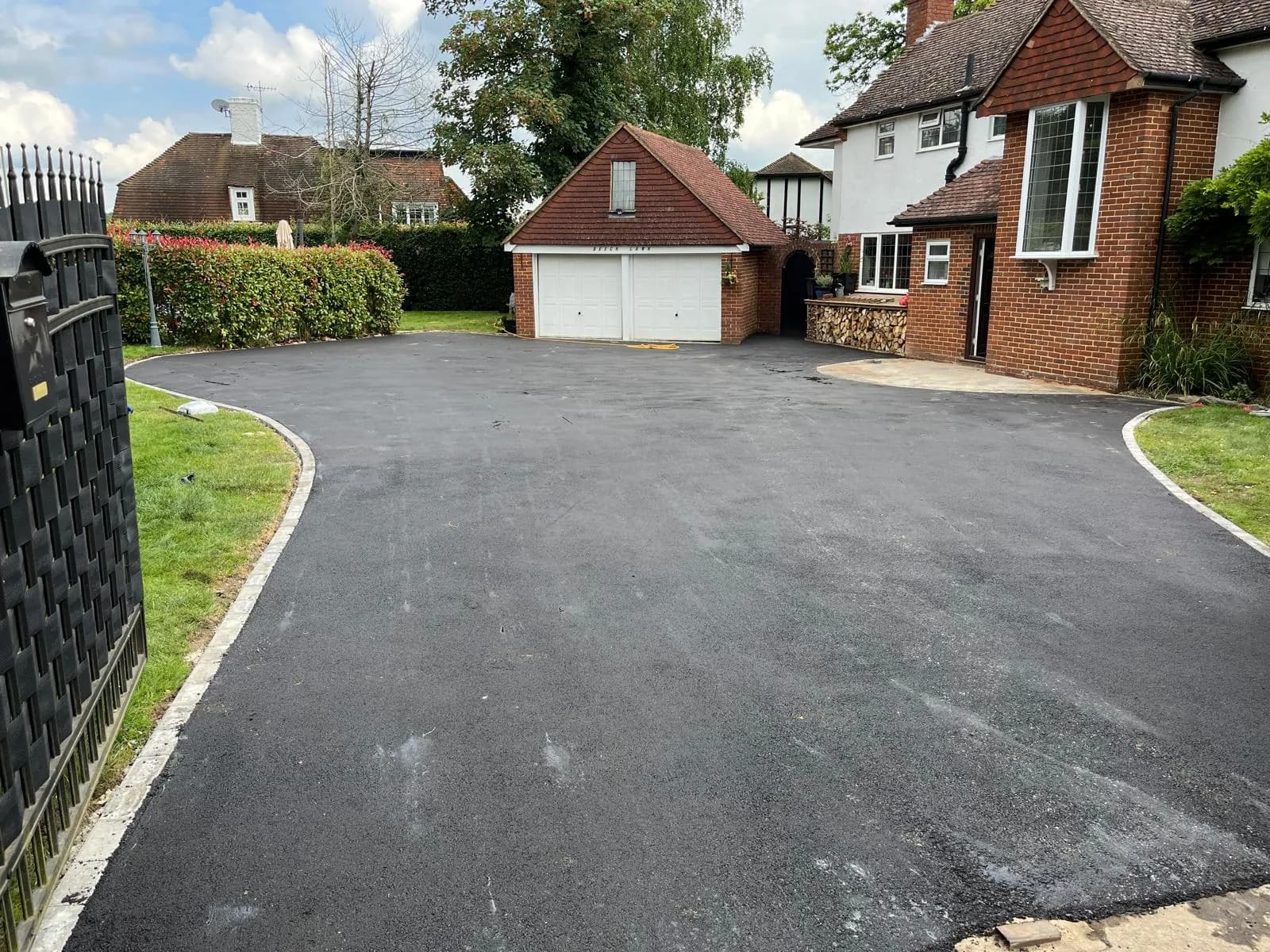
A smooth, hard-wearing tarmac driveway with generous parking and clean edges — a clear step up from the loose gravel it replaced.
See the full projectTarmac in Woking
Tarmac is the surface we lay most on Woking's larger residential plots, particularly in Hook Heath and along the private roads running off the western side of town where drives can cover a serious area. It is cost-effective at scale, handles the heavier vehicles that come with a big household, and on a well-built base it stays flat and quiet for well over a decade. The issue is that Woking has also seen its share of thin, quickly laid tarmac jobs that start to rut and edge-crumble within a couple of winters — and the gap between the two is almost entirely down to base depth, compaction, and edge restraint.
Across the GU21 and GU22 postcodes we work on everything from long residential drives in St John's and Pyrford to commercial yard resurfacing for businesses around Sheerwater and Goldsworth Park. Woking's ground conditions swing between the free-draining sandy soils of the heathland areas and heavier clay closer to the town and the Basingstoke Canal corridor. We check the ground on every visit rather than assuming one specification will cover the borough, because it does not.
How we work
We come out, measure up, and talk through what you want.
Spec, schedule, and price in writing — no surprises.
Rip-out, prep, surface. Tidy site each evening.
Walk-through on completion and a call back if anything settles in.
The jobs we are called in to fix in Woking are almost always the same: edge crumble where the edging was skipped, rutting where the surface course was too thin or the binder was not rolled properly while hot, and low spots where the sub-base was laid in one go rather than compacted in layers. None of these failures appear on day one. They show up in the second or third year, by which time the contractor who did the work is long gone.
We hot-lay from a local asphalt plant so the material arrives at temperature and goes down within its workable window. Binder course at 60mm or deeper goes down first, compacted with a drum roller while it is still hot enough to consolidate properly. Surface course — AC10, 25 to 30mm — follows once the binder has cooled sufficiently, rolled in overlapping passes to achieve a fully dense finish. Edge restraints are set and haunched in concrete before any asphalt is laid. That is the sequence that produces a drive that is still flat at year ten.
Sandy heathland soils in Hook Heath and St John's drain freely, which is useful, but they also have limited load-bearing capacity and can wash out from under a shallow base if the sub-base depth is not matched to the ground. On plots in this area we typically specify a geotextile membrane between the formation and the Type 1 sub-base to stop fines migrating up into the stone over time. It is a small addition to the build cost that prevents the gradual settlement that eventually dips a tarmac drive.
Because tarmac is not a permeable surface, any new or replacement drive over 5m² needs the runoff managed on your own land. Woking's plots in the west tend to have the space to do this cleanly: a fall to a planted border, a drainage channel to a soakaway, or a permeable strip along the edge. We design this in at the quote stage — it is easier and cheaper to get right at the start than to retrofit drainage into a finished drive.
FAQ
For a standard residential driveway the laying itself takes one to two days once the base is ready. The full job — including excavation and sub-base build — typically runs three to five working days for most domestic drives. Larger Hook Heath or St John's plots with more area or a longer run will take longer and we programme accordingly, handing you a schedule with the written quote.
An overlay is sometimes the right answer if the existing base is sound — no soft spots, no subsidence, and enough clearance at the garage threshold and gate posts. Where the base is failing or water is getting in, an overlay simply postpones the problem and adds a layer to remove next time. We give you an honest assessment at the site visit and will not recommend an overlay over a base that will move under it.
Both ground types need accounting for. Sandy heathland soils drain well but have lower bearing capacity, so we specify a deeper sub-base with a membrane on those plots. Clay ground holds moisture and can expand and contract with seasonal wet and dry cycles — the sub-base needs to be deep enough and the membrane in place to prevent fines pumping up into the stone. We check the ground on every site visit and adjust the specification before we quote.
Yes. Commercial surfacing around the Sheerwater and Goldsworth Park areas is a regular part of our work. Specifications for commercial yards differ from domestic drives in asphalt depth, drainage design, and sometimes in the surface course material used. We can provide a written condition report and spec for new or existing sites, and can discuss phased working if you need to keep parts of the yard in use during the job.
Tell us roughly what you'd like done. We'll come out and quote in writing.
Nearby
Surfacing in
Period homes off the Hog's Back, new builds around the A3 corridor.
See work in Guildford→Surfacing in
Stoke D'Abernon homes and the Fairmile estates.
See work in Cobham→Surfacing in
St George's Hill and Burwood Park resin and block paving.
See work in Weybridge→Surfacing in
Claygate, Hinchley Wood, and Esher village driveways.
See work in Esher→