

Surfacing in
Guildford
Period homes off the Hog's Back, new builds around the A3 corridor.
See work in Guildford→We will beat ANY like for like quotation. Contact us for more information.
Surfacing in Godalming
Hot-laid tarmacadam for long, hard-wearing driveways. — for Godalming homeowners and properties.
BeforeAfterBefore & after
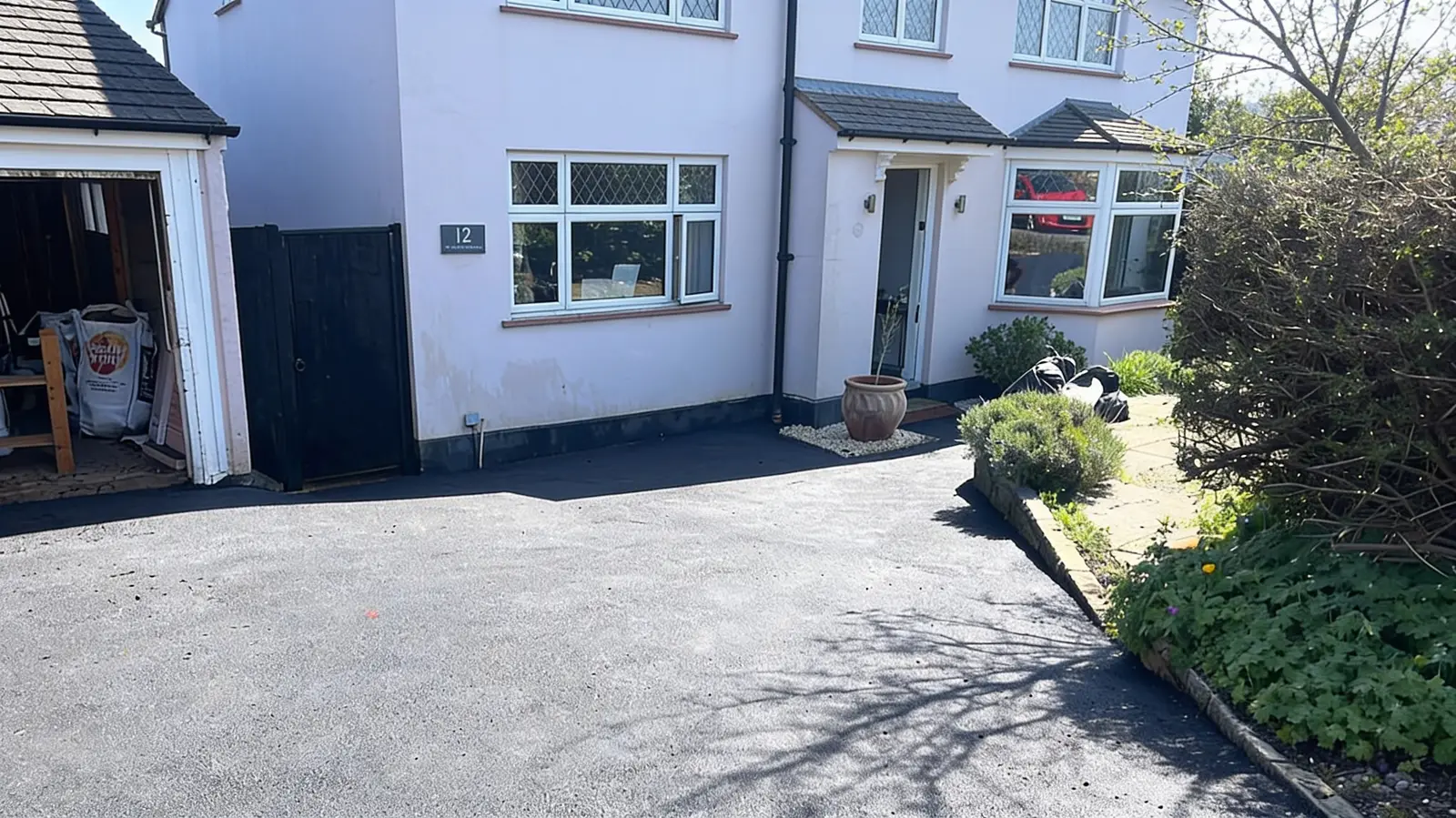
A smooth, hard-wearing tarmac driveway with no more patches or ponding — an even surface that lifts the whole frontage.
See the full projectTarmac in Godalming
Godalming sits on the Greensand ridge, and the ground reflects that — free-draining sandy soils in parts, but the moment you drop into Farncombe or head out towards Busbridge the topography changes and you are dealing with sloped plots, clay pockets, and drives that need proper drainage designed in from the start. Tarmac handles all of it well when it is built correctly: a proper binder course over a compacted Type 1 sub-base, edges restrained before any asphalt is laid, and the surface rolled at temperature rather than left to cool undercompacted.
The period housing stock around the town centre and out along Holloway Hill means a lot of the drives we see in Godalming are either tired tarmac overlays from a decade ago or original concrete slabs that have moved and cracked. In both cases we assess the existing base honestly before recommending an overlay or a full rebuild — because on a sloped Greensand plot with a clay seam underneath, the base matters more than the surface you can see.
How we work
We come out, measure up, and talk through what you want.
Spec, schedule, and price in writing — no surprises.
Rip-out, prep, surface. Tidy site each evening.
Walk-through on completion and a call back if anything settles in.
A lot of the drives we quote in Godalming have a meaningful gradient — whether that is a short steep drop from the road in Farncombe, a longer ramped approach in Busbridge, or a terraced front in one of the conservation-adjacent streets near the town centre. Tarmac handles slopes well, but the drainage design matters: falls need to direct water to a channel at the base of the slope or to a planted edge, not straight down the drive and onto the pavement. We factor this into every quote on a sloped plot so you are not retrofitting a gully six months later.
Period properties in Godalming often sit on tighter frontages than modern builds, and the existing edging — if there is any — is frequently old haunched brick or concrete that has moved. We reset edges before we lay any asphalt, not after. It is a step that adds time but it is the reason the perimeter of the drive does not crumble in the first two winters.
Every tarmac driveway we lay in Godalming is built to the same written specification: Type 1 MOT sub-base at the depth the ground conditions require — typically 150mm for car-only drives, more if the formation soil is soft or if you have regular van traffic — compacted in layers, followed by a binder course of AC14 dense bitumen macadam at 60–70mm, a tack coat, and a 25–30mm surface course of AC10 close-graded wearing course rolled with a steel-drum roller. We include the spec in writing on every quote so you can compare it properly against other prices you receive.
We hot-lay from a local asphalt plant, which means the material arrives within its workable temperature window and compacts to its design density. Cold-lay compound is a patching material, not a surface course, and we do not use it for new or replacement domestic drives. The difference in long-term performance — density, bond strength, surface durability — is significant.
FAQ
Yes — tarmac is one of the better materials for sloped drives because it can be laid and rolled to accurate falls. The key is drainage design: on any gradient the surface water needs directing to a channel, edge strip, or planted border rather than sheeting straight down to the road. We design this in at the quote stage for every sloped plot we visit in Godalming, including the steeper approaches in Farncombe and Busbridge.
Free-draining Greensand is generally a good substrate — it is stable and does not heave. The issue is variability: pockets of clay or made ground are common, particularly on older plots close to the town centre. We check the formation at the site visit and adjust the sub-base depth and specification to what the ground actually requires, rather than quoting a standard depth and hoping for the best.
Tarmac itself does not require planning permission for a standard residential driveway replacement, but if your property is within a conservation area or is listed, it is worth checking with Waverley Borough Council whether the change of surface or any associated boundary work needs consent. We are familiar with the conservation areas around Godalming town centre and can advise on what normally applies, though a formal planning query should go to the council directly.
In normal temperatures, light cars can usually park on hot-laid tarmac by the end of the same day. We recommend waiting 48 hours before parking anything heavier — vans, caravans, or vehicles with a towbar. During the first couple of weeks in warm weather, avoid parking in exactly the same spot repeatedly, as tarmac continues to cure and can mark slightly under point loads until it has fully hardened.
Tell us roughly what you'd like done. We'll come out and quote in writing.
Nearby
Surfacing in
Period homes off the Hog's Back, new builds around the A3 corridor.
See work in Guildford→Surfacing in
From Hook Heath driveways to commercial yards near Sheerwater.
See work in Woking→Surfacing in
Stoke D'Abernon homes and the Fairmile estates.
See work in Cobham→Surfacing in
St George's Hill and Burwood Park resin and block paving.
See work in Weybridge→