

Surfacing in
Guildford
Period homes off the Hog's Back, new builds around the A3 corridor.
See work in Guildford→We will beat ANY like for like quotation. Contact us for more information.
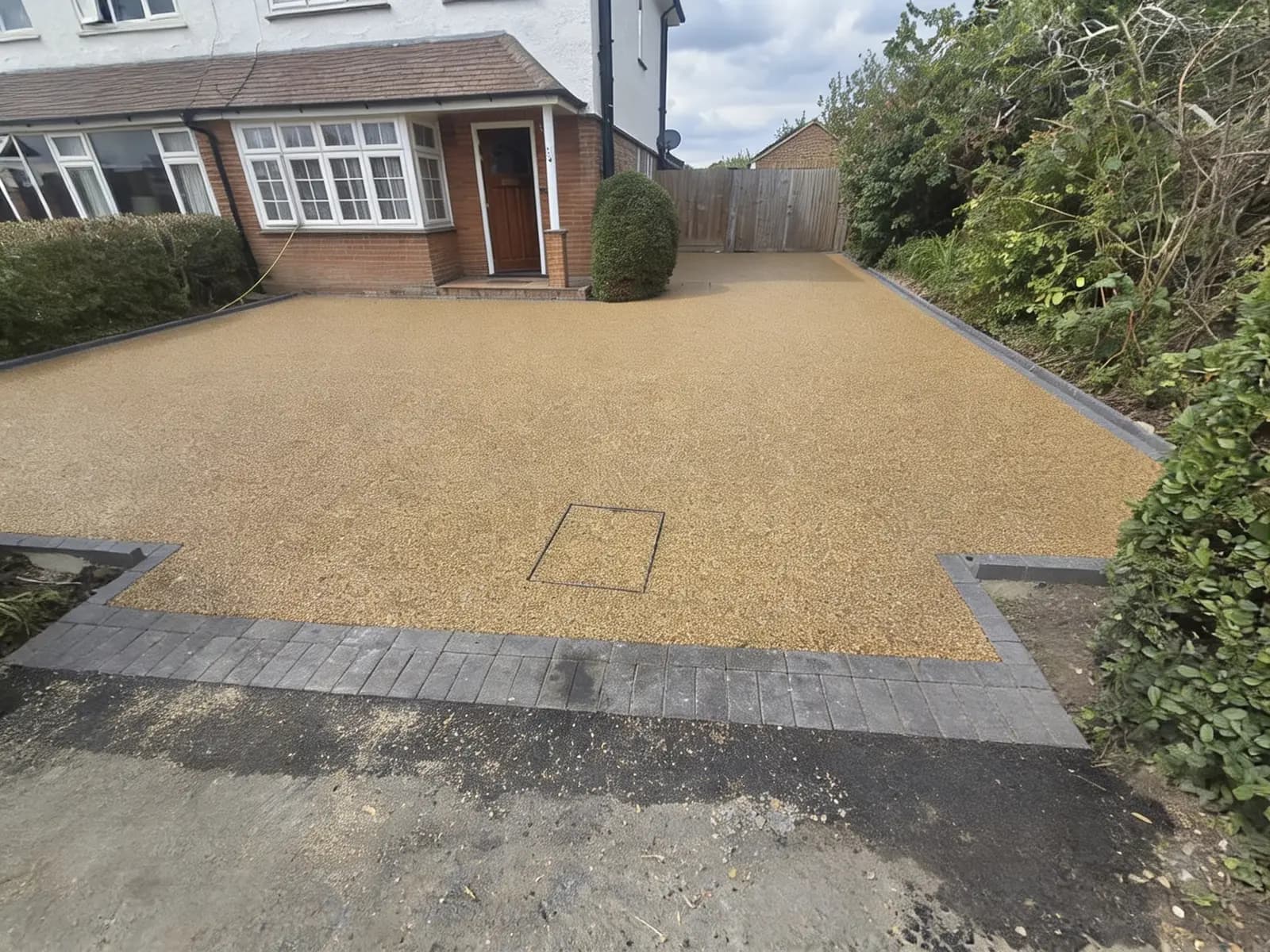
Surfacing in Walton-on-Thames
Permeable resin-bound aggregates, smooth and SuDS-compliant. — for Walton-on-Thames homeowners and properties.
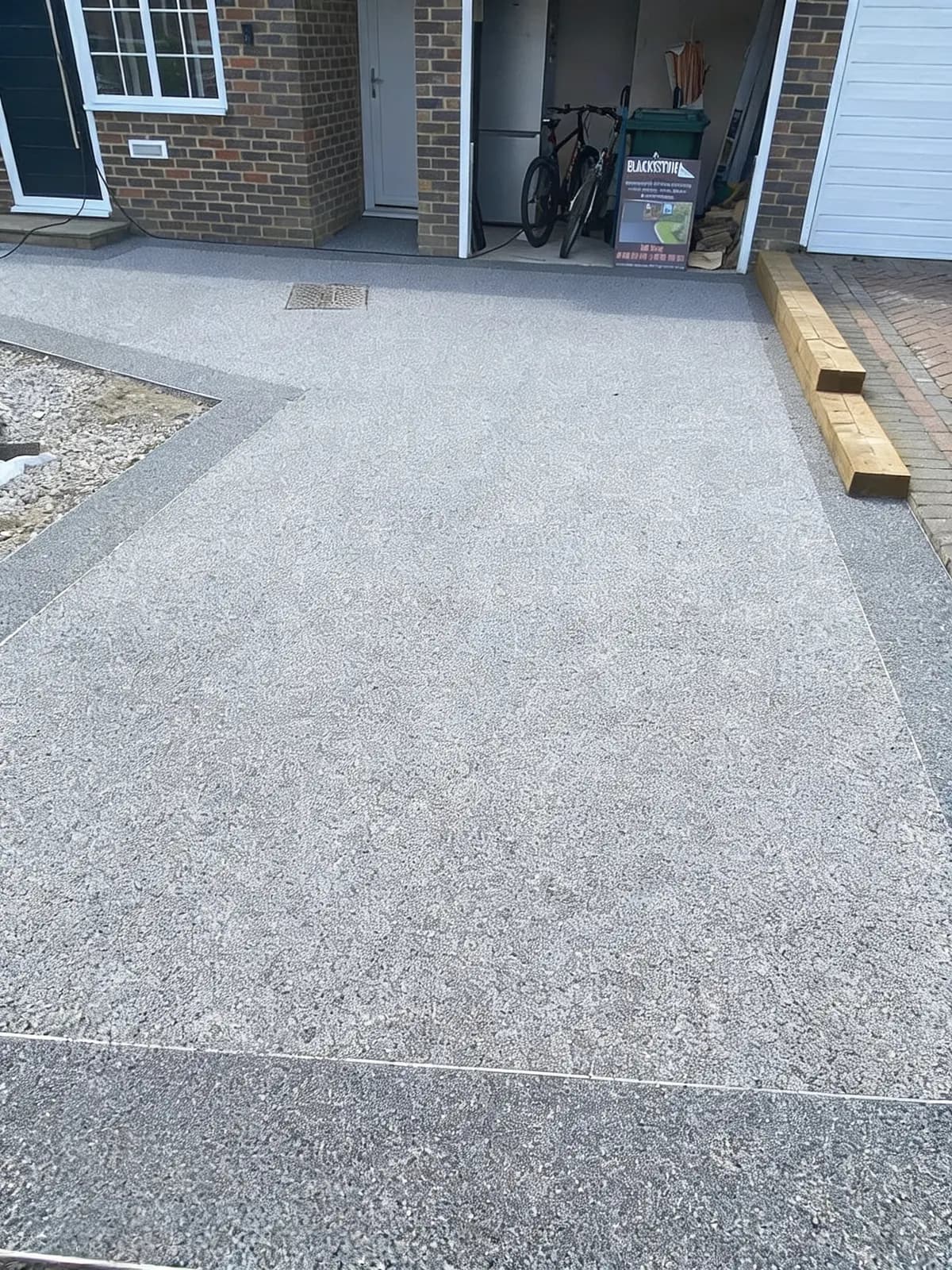 BeforeAfter
Before & after
A smooth, low-maintenance silver-grey resin driveway laid over the sound existing base — seamless, hard-wearing, and a clear step up from the old concrete.
See the full projectResin in Walton-on-Thames
Walton-on-Thames has exactly the kind of housing stock that suits resin bound well: the closes and cul-de-sacs around Ashley Park and the tighter frontages near the river tend to be modern enough to take a contemporary aggregate finish, yet the plots are compact enough that a seamless, low-maintenance surface makes practical sense. Resin's SuDS-compliance is also directly relevant here — Thames-side ground can be slow-draining, and a surface that passes water straight through into an open-graded base removes the need for a separate soakaway on a plot where there may not be room for one.
We have laid resin on driveways throughout Walton, from the detached houses around Burwood Park to the semi-detached roads closer to the town centre. The ground conditions vary from plot to plot, particularly where clay is close to the surface, so the base we specify is always set to what we find at the site visit rather than a standard guess. On heavier clay we deepen the sub-base and add a geotextile membrane to keep fines out of the drainage layer — without that step, a permeable base gradually silts up and stops draining.
How we work
We come out, measure up, and talk through what you want.
Spec, schedule, and price in writing — no surprises.
Rip-out, prep, surface. Tidy site each evening.
Walk-through on completion and a call back if anything settles in.
The closes and residential streets between the town centre and the river have relatively compact frontages — drives where every square metre is visible from the street, and where a clean, seamless finish makes a material difference to how the property looks. Resin bound achieves that in a way that loose gravel never quite does, and without the joint maintenance that block paving eventually requires. For a household that does not want to spend time re-sanding joints or pulling weeds from cracks, it is the most genuinely low-maintenance hard surface we lay.
SuDS compliance is another practical reason resin works well on these plots. Standard tarmac and concrete sheds all its water as runoff, which means designing in drainage from the outset — a soakaway, a channel to a planted border, or a permeable strip along the edge. Resin bound on a permeable base handles this automatically: water drains through the surface and base and infiltrates the ground below, satisfying the requirements of the General Permitted Development Order without additional drainage infrastructure.
The most common reason resin drives fail early — delamination, surface lifting, localised cracking — is a base that was not built for the ground underneath it. In Walton, the proximity to the Thames flood plain means some areas carry heavier clay and a higher seasonal water table than you might expect. On those plots we build an open-graded porous asphalt macadam base of sufficient depth and add a non-woven geotextile on the formation to prevent fine soil particles migrating up into the drainage aggregate over time.
We also only mix and lay resin within the manufacturer's specified temperature and humidity range. Resin laid in cold or damp conditions does not cure correctly: the bond between aggregate and binder is compromised, and the surface will begin to delaminate within a year or two. Both failures are invisible on the day of installation, which is why choosing a contractor who is honest about working conditions matters as much as the aggregate you pick.
FAQ
Yes, provided the base is built for it. In the parts of Walton where clay sits close to the surface and drainage is slower, we use a deeper open-graded sub-base and a geotextile membrane on the formation to stop fines migrating into the drainage aggregate. We check the ground at the site visit before finalising the specification — a standard base depth is not always the right answer on heavier clay soils.
Resin bound laid over an open-graded, permeable base meets SuDS drainage requirements under the General Permitted Development Order — water passes through the surface and base and into the ground rather than running off. This is relevant on the more compact plots in Walton where there is limited space for a separate soakaway. The key is that both the resin layer and the sub-base beneath it must be permeable, not just the surface course.
The resin layer itself goes down in a day for most domestic drives. If we are building a new permeable base from scratch, the full job — including excavation, sub-base, and resin — typically runs to two or three working days depending on size and access. We give you a clear programme with the written quote so you know when the drive will be usable again.
Sometimes, but only if the existing surface is structurally sound, well-bonded to the base, and — critically — already permeable. Resin over a closed tarmac or concrete base has nowhere to drain to, which creates a planning compliance issue and a surface that collects water at the edges. We will assess the existing base honestly at the site visit and tell you whether an overlay is viable or whether a proper permeable base needs to be built first.
Tell us roughly what you'd like done. We'll come out and quote in writing.
Nearby
Surfacing in
Period homes off the Hog's Back, new builds around the A3 corridor.
See work in Guildford→Surfacing in
From Hook Heath driveways to commercial yards near Sheerwater.
See work in Woking→Surfacing in
Stoke D'Abernon homes and the Fairmile estates.
See work in Cobham→Surfacing in
St George's Hill and Burwood Park resin and block paving.
See work in Weybridge→