

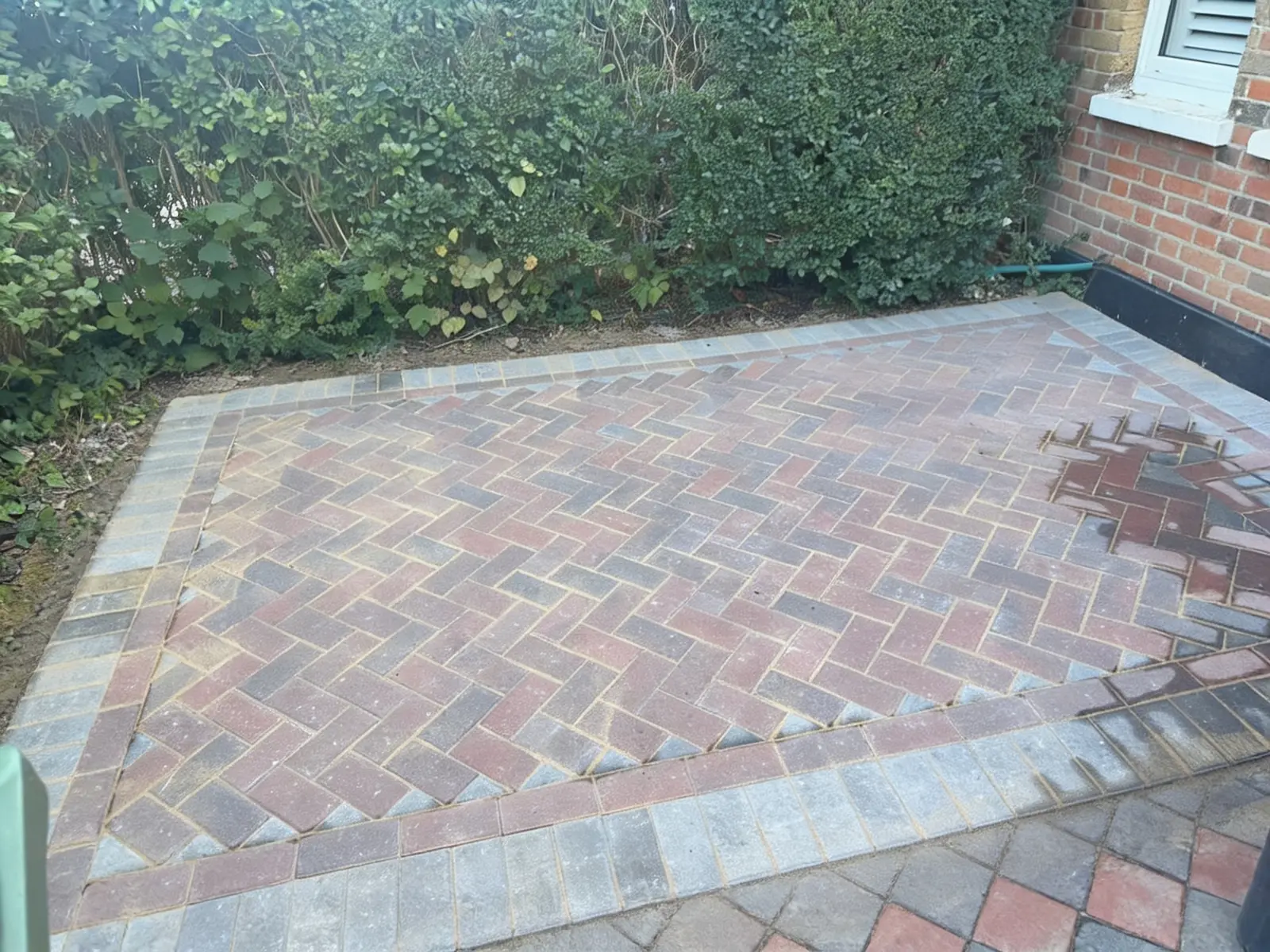
Surfacing in
Guildford
Period homes off the Hog's Back, new builds around the A3 corridor.
See work in Guildford→We will beat ANY like for like quotation. Contact us for more information.
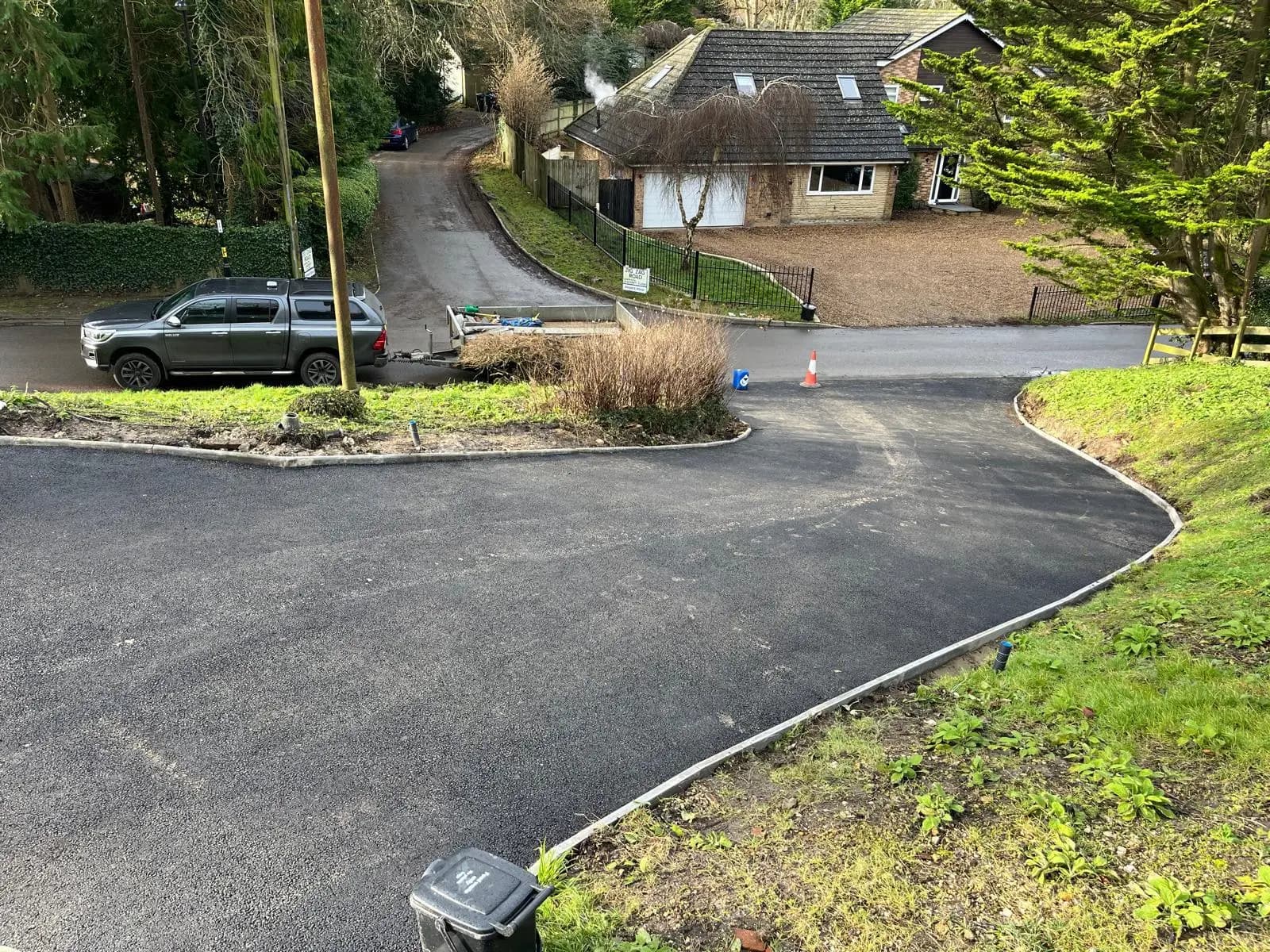
Surfacing in Surrey
Residential driveways, patios, and commercial work in Cranleigh and the surrounding area.
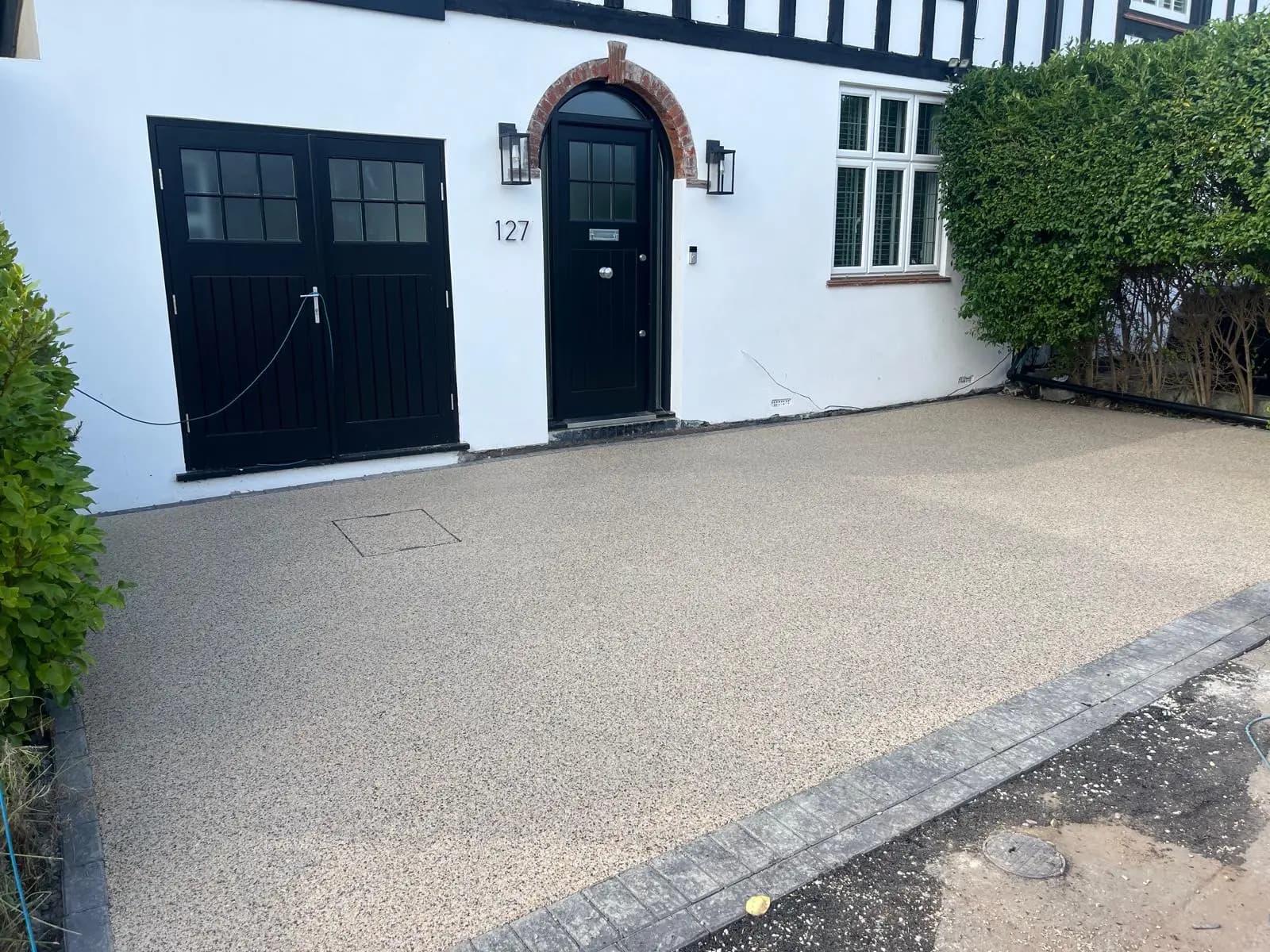 BeforeAfter
Before & after
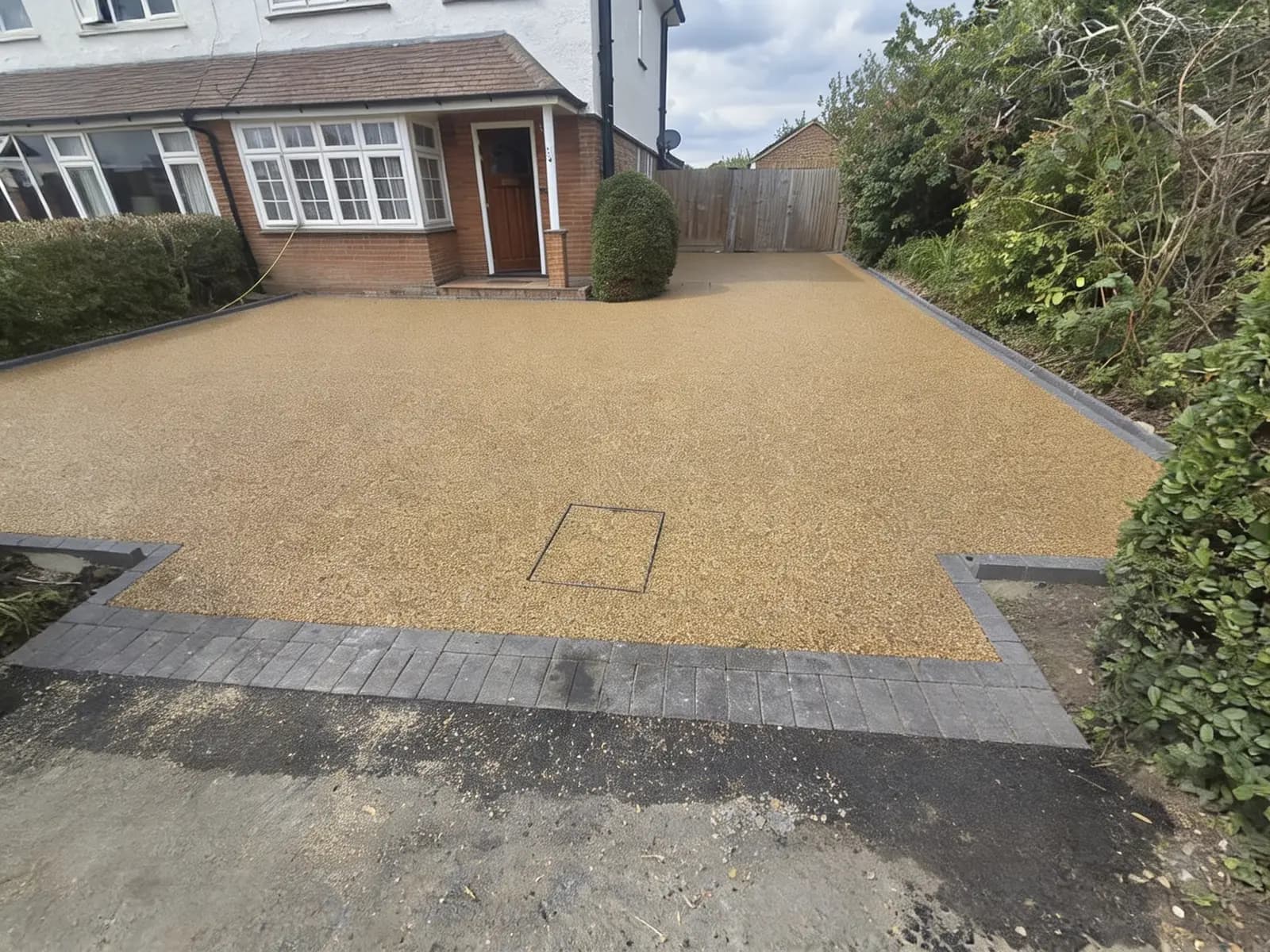
A smooth, low-maintenance golden resin driveway with a clean charcoal border that suits the period frontage — seamless, hard-wearing, and a clear lift from the old concrete.
See the full projectAbout Cranleigh
Cranleigh occupies a quiet corner of the Surrey Hills, widely cited as the largest village in England, and the properties here reflect that generous scale. Country houses with sweeping entrance drives, barn conversions set back from winding lanes, and substantial village homes with long front approaches are all common — and each one presents a surfacing job that is quite different from a standard suburban driveway in a larger town.
The ground beneath Cranleigh sits on Wealden clay, a heavy, moisture-retentive soil that behaves very differently from the chalk and greensand you find further north in the county. Clay moves with the seasons — it shrinks in a dry summer and swells in a wet autumn — and a sub-base that does not account for that movement will show it in three or four years. Getting the depth and drainage right from the start is far more important here than in areas with lighter soils, and it is the first conversation we have on every Cranleigh site visit.
We cover Cranleigh and the surrounding villages regularly, taking in Ewhurst, Shamley Green, Bramley, Alfold, and the quieter hamlets tucked along the lanes between them. Long drives on rural plots are a genuine speciality of ours — laying consistent, well-drained surfaces over 30, 50, or even 100 metres requires a different approach to access and logistics than a standard urban frontage, and we plan for that upfront so the job runs smoothly.
Areas we cover in Cranleigh
Recent work
A significant number of properties around Cranleigh have drives that extend well beyond what you would find in a town. Whether it is a converted farmstead with a sweeping gravel approach or a more recent country house with a tarmac drive through mature gardens, these longer runs come with their own set of considerations. Material deliveries need planning — bulk loads of sub-base aggregate or hot-laid tarmac have a time window — and access for machinery along narrow lanes needs to be confirmed before a single day is booked.
The Wealden clay that sits under much of this area is the other constant. On short drives it is manageable with a well-specified sub-base; on longer rural runs where water drains slowly off surrounding fields and land, we typically recommend a geotextile separation layer beneath the sub-base to prevent clay migration into the stone over time. This is not an upsell — it is the difference between a drive that lasts 15 years and one that starts to rut and sink after five.
Not every finish that works well in a suburban town centre suits a country property in the Surrey Hills. Resin-bound surfaces remain popular here because they are permeable, low maintenance, and come in natural aggregate colours that sit comfortably alongside sandstone walls and brick. On longer drives especially, the seamless nature of resin means no joints to settle unevenly — which matters when the ground beneath is clay.
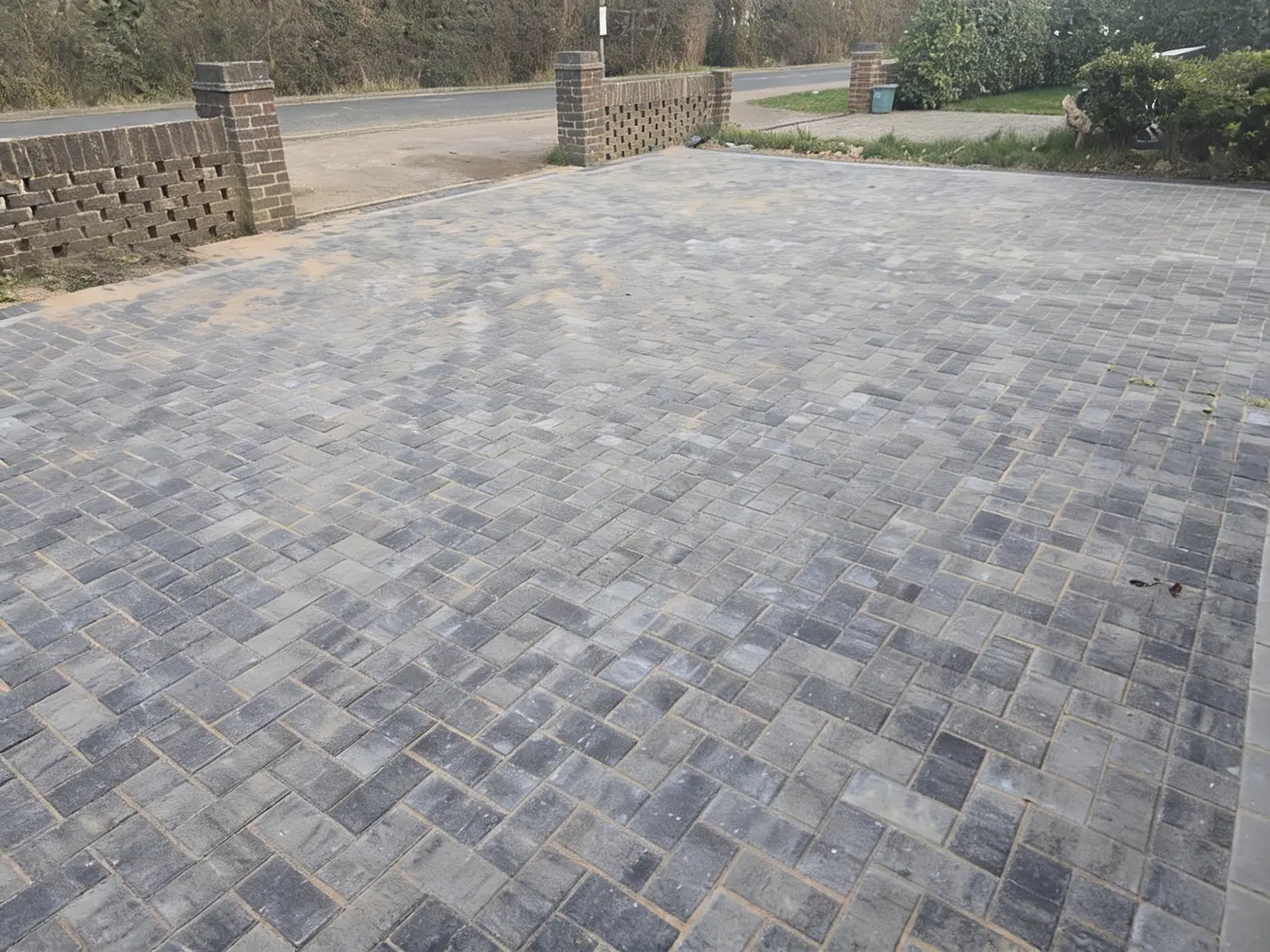
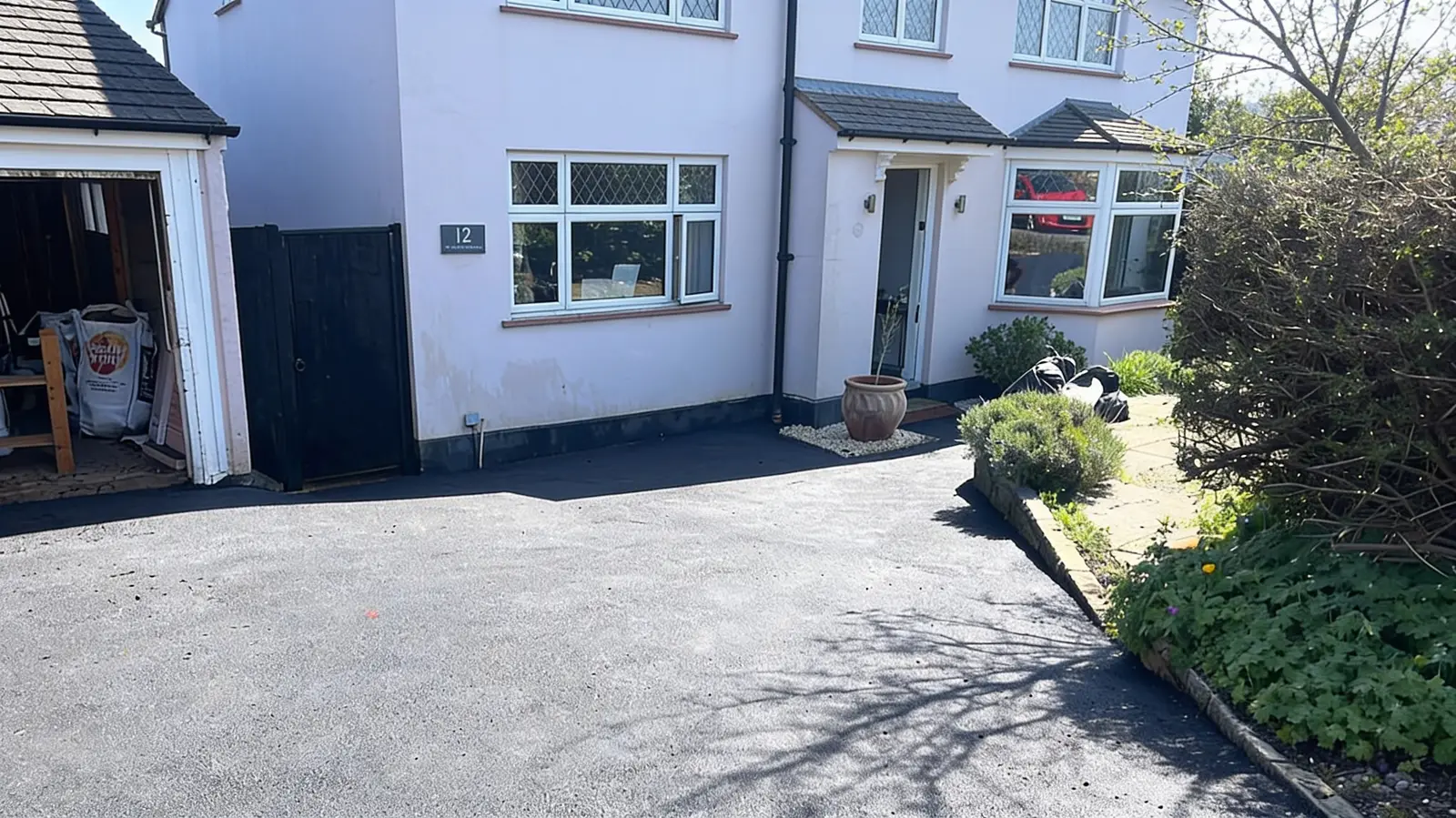
Tarmac remains the practical choice for many rural drives, particularly where the priority is a durable, easy-to-maintain surface that stands up to larger vehicles and machinery. Block paving works well on formal approaches to period houses but requires careful detailing at the edges where the surface meets unmade ground or planted borders. Whatever the finish, the sub-base is the same story every time: get it deep enough, get it well-compacted, and get the drainage sorted before the top goes on.
Surfacing in Cranleigh
Yes — long rural drives are a regular part of what we do around Cranleigh. We plan material deliveries and machinery access in advance, and we are used to working on drives of 30 to 100 metres or more through mature gardens and along restricted lane accesses. We will flag any access concerns at the survey stage so there are no surprises on the day.
It can if the sub-base is not built deep enough and with the right drainage design. Wealden clay moves seasonally and holds water, so we typically specify a heavier sub-base than we would on sandier ground and include a geotextile membrane on longer runs. We assess the specific ground conditions on every site visit — there is no single answer that fits every plot.
It depends on the look you want and how the drive is used. Resin-bound in a natural aggregate works very well visually and drains freely. Tarmac is the most practical and economical choice on long drives. Block paving suits formal approaches to period houses. We will give you an honest recommendation based on the property and your budget, not just the margin on the material.
We cover the full area, including Ewhurst, Shamley Green, Bramley, Alfold, Rowly, and the smaller hamlets along the lanes between them. If you are in a hamlet with a postcode that is not obviously Cranleigh and you want to check, just call and we will confirm — we are not going to turn down a good job because of a postcode boundary.
Tell us where you are and what you'd like done. Free site visit, written quote.
We also cover
Surfacing in
Period homes off the Hog's Back, new builds around the A3 corridor.
See work in Guildford→Surfacing in
From Hook Heath driveways to commercial yards near Sheerwater.
See work in Woking→Surfacing in
Stoke D'Abernon homes and the Fairmile estates.
See work in Cobham→Surfacing in
St George's Hill and Burwood Park resin and block paving.
See work in Weybridge→Surfacing in
Claygate, Hinchley Wood, and Esher village driveways.
See work in Esher→Surfacing in
Conservation areas and rural plots around the town.
See work in Farnham→