9 March 2026
Tarmac is the cheapest hard-wearing driveway material and that makes it the easiest to cheat on. The standard corner-cutting playbook is the same on every job: thin surface, skipped sub-base, no edging, light compaction. Drives done this way look fine for the first six months and start failing inside two years. Here's what to look for in a quote.
First, depth. A properly built drive has at least 60mm of binder course plus 25–30mm of surface course — call it 85–90mm of asphalt total. A quote that just says "two-coat tarmac" with no depth is a quote you can't compare. We always put the spec in writing in millimetres because it's the single biggest cost-and-quality lever.
Second, what's underneath. The standard answer should be 150–250mm of compacted Type 1 sub-base — possibly more if the existing ground is soft. "We'll lay on the existing" is sometimes fine on a sound base, but it's the line most often used to skip the most expensive part of the job. Always ask.
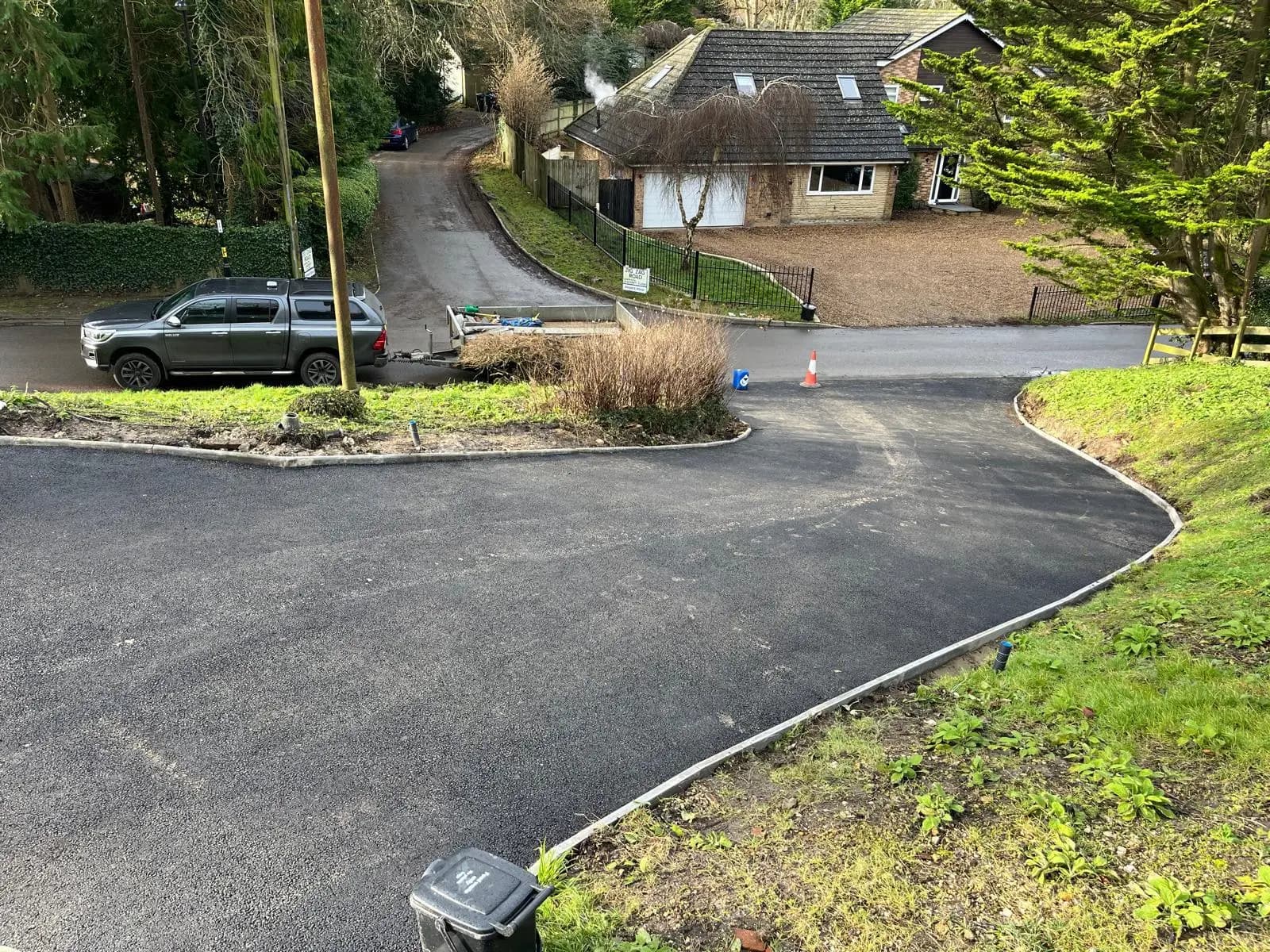
Third, edges. Tarmac with no edge restraint fails first at the perimeter — it cracks and crumbles outward where there's nothing holding it. Proper edging is a haunched concrete bed under either a block-paving border, a kerb, or a steel edge. Cheap quotes skip this.
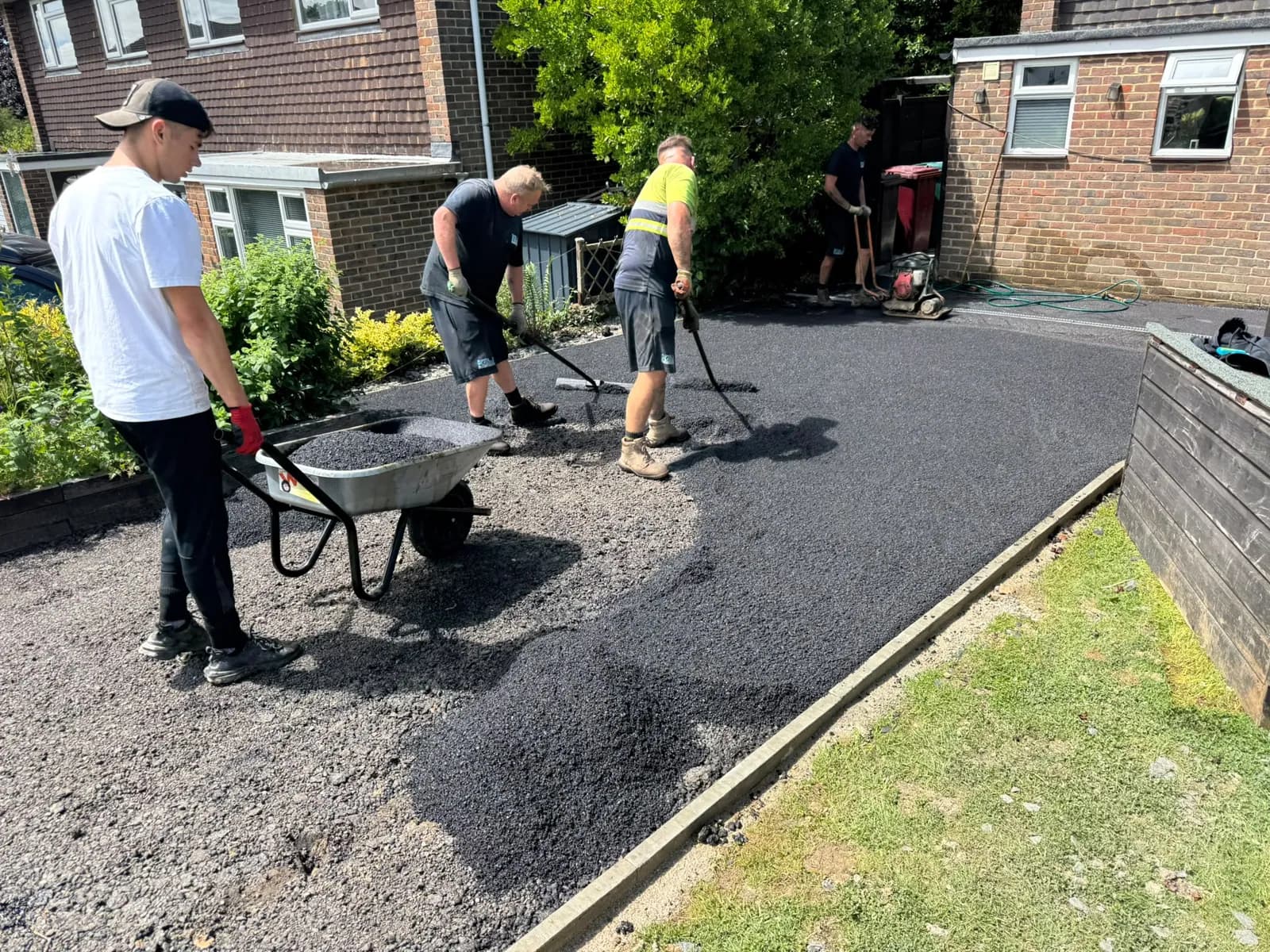
Fourth, compaction. Hot-laid tarmac that isn't properly rolled while it's still hot stays soft. You'll see tyre marks in the first hot summer, then ravelling. Ask whether they use a roller or just a wacker plate — the answer should be roller.
If a quote is much cheaper than the others, one or more of these four corners is being cut. The failure mode tells you which one.