15 November 2025
Picking a surfacing contractor is high-stakes for what looks like a simple job. Get it wrong and the drive needs ripping up in two years. Five questions cover most of the bases.
First: can you give me two recent projects nearby I can drive past? Any contractor doing real work has plenty. The answer should come back the same day, not eventually.
Second: can you put the spec in writing — depth of surface course, depth and type of sub-base, edge restraint? This is the single most useful filter. Good contractors do this routinely. Corner-cutters can't, because the lack of detail is how they keep the price down.
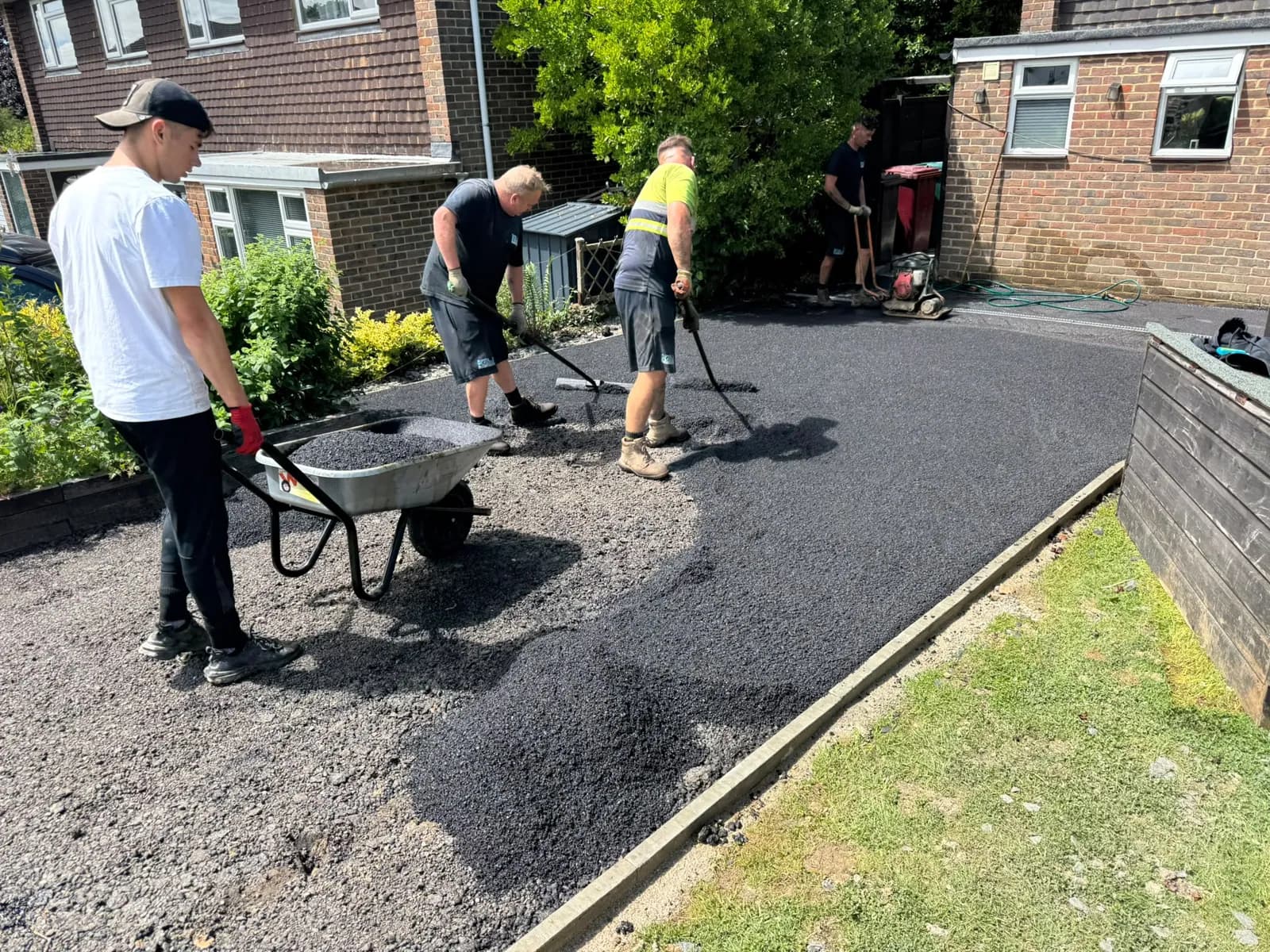
Third: who's on site? With a small business you'll often be told "me and my brother" — that's fine. With a larger outfit it might be a foreman you've never met. Either way, find out so you know who to talk to on day one.
Fourth: payment schedule. A small deposit (10–20%) is normal. A demand for 50% up-front, especially in cash, is the classic warning sign — the money disappears and so does the contractor. Reputable firms invoice on completion or on staged milestones.
Fifth: aftercare. Most surfaces have a settle-in period (jointing sand top-up, surface dressing aftercare sweep). Ask what they'll do and when. If the answer is "we're gone once we've been paid," expect that.