We will beat ANY like for like quotation. Contact us for more information.
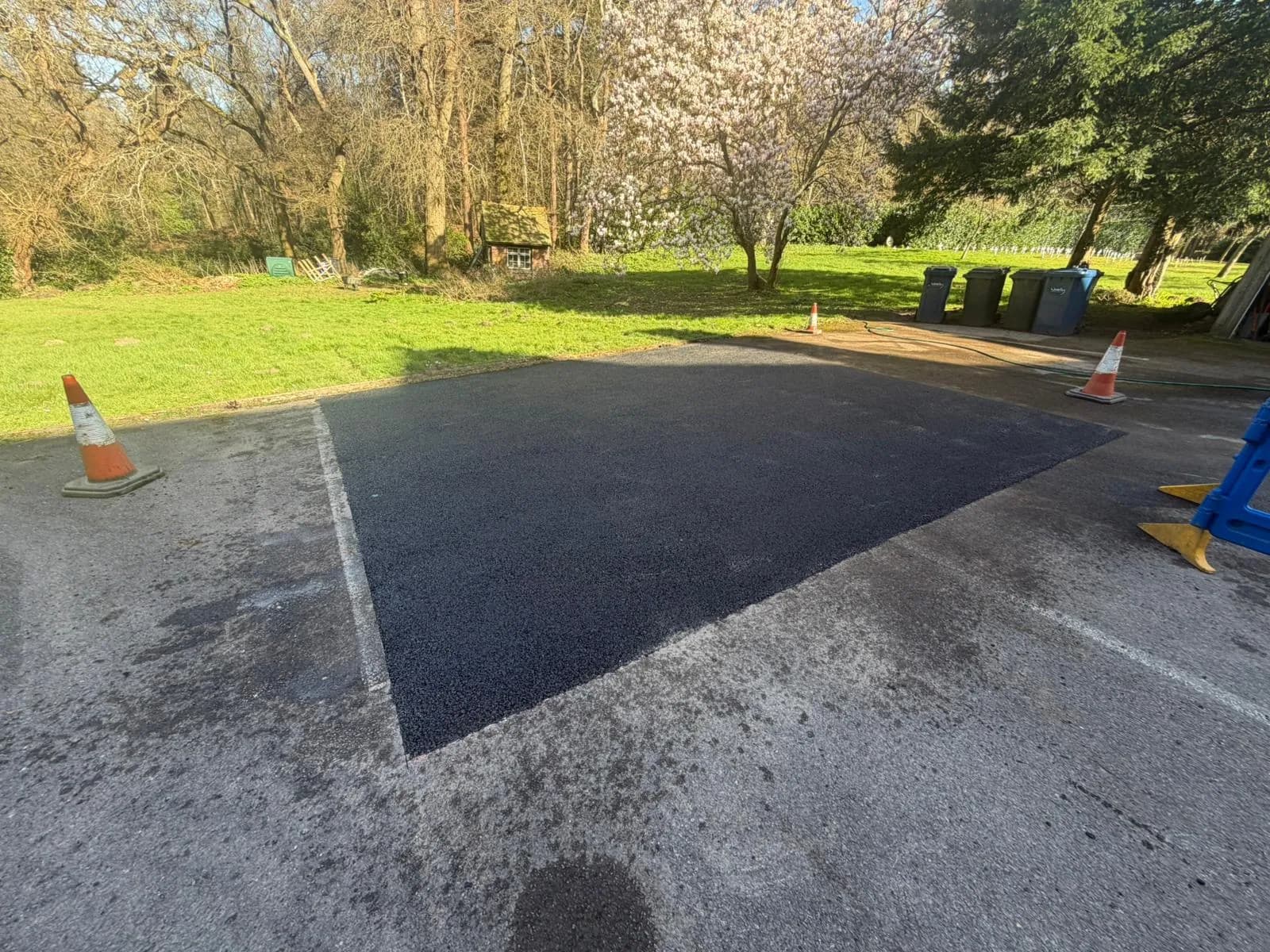
Tarmac surfacing · Shere, Surrey
Tarmac surfacing in the grounds of a church in Shere — a clean, even area laid to tidy the access and shed water.
The project, start to finish
Tap any photo to view it full size.
The brief
Tarmac surfacing in the grounds of a church in Shere — a clean, even area laid to tidy the access and shed water.
The work
We prepared the base and set the edges, then hot-laid the tarmacadam and rolled it to a smooth, even finish with the falls set to drain cleanly.
The outcome
A neat, hard-wearing tarmac surface that tidies up the church grounds and drains properly.
This was a tarmac surfacing project in Shere, Surrey. We cover Surrey, UK for residential and commercial surfacing.
How we work
Most unadopted roads in Surrey are carrying far more traffic than they were designed for, and the surface shows it. Where a highway authority would intervene on an adopted road, the responsibility falls to the landowner or management company — which means the decision about when to resurface, and to what standard, is a commercial one. Getting it right the first time matters, because a poorly specified overlay on a failing base just fails twice.
We walk the road with you, assess the existing surface condition, check ironwork levels, and probe for areas of base failure. The quote includes a written specification — material grade, layer depths, and any drainage or ironwork we need to allow for. Nothing is left vague.
Where an overlay is appropriate, we plane off the existing surface to the required depth so levels are restored and the new course keys in properly. Where the base is failing, we cut out and rebuild those sections before any surface is laid. Ironwork — gullies, manhole covers, valve boxes — is re-set to the new finished level.
AC14 dense bitumen macadam binder course is laid and compacted to the design depth. On heavily trafficked routes or where the road takes delivery vehicles, the binder course is a structural layer in its own right, not an afterthought. Longitudinal and transverse joints are staggered so they don't coincide with the wearing course above.
AC10 or SMA wearing course is laid to the finished level and rolled to the correct density. Ironwork is checked flush once the surface has cooled. We sweep the road clear before opening to traffic and provide a brief written handover note on what to expect in the first weeks — minor scuffing from initial traffic is normal on new wearing course.
Questions
An adopted road is maintained at public expense by the highway authority — Surrey County Council in this area. An unadopted road is privately owned and maintained, which means the cost of resurfacing falls to whoever owns the road, usually a management company, a residents' association, or a private landowner. If you are not sure of your road's status, the highway authority's record of streets is publicly searchable, or we can advise based on the site.
A visual inspection will usually tell us. Surface cracking on its own points to an overlay solution. Rutting, fatigue cracking (the 'crocodile skin' pattern), soft spots underfoot, or standing water that hasn't been there historically all suggest base failure. We carry out a condition survey before quoting and will give you a straight answer — including an estimate of how many more years an overlay will buy you versus a full rebuild.
If the works are entirely within private land and do not affect the public highway or any services in the public highway, NRSWA does not strictly apply. However, where our works approach or cross a public carriageway — for example, where a private estate road meets a public junction — we manage the interface properly, with correctly qualified operatives and, where required, a Section 50 licence. We will tell you what applies on your site.
For regular HGV traffic the wearing course should be AC10 close-graded or SMA rather than the lighter grades used on residential drives. The binder course depth should be 70–80mm on a sound base, and where the base has been compromised we would rebuild to at least 225mm of compacted sub-base before laying asphalt. We size the specification to your actual traffic — there is no point building a motorway-grade road for a light estate access, and no point laying a thin overlay on a road that takes 40-tonne artics.
Yes. Re-setting ironwork to the new finished level is part of every road surfacing contract we carry out. Where covers or frames are damaged or no longer fit for purpose, we can supply and fit replacement units. We notify the relevant utility owners where required. Ironwork that is left proud of the new surface is both a liability and a tyre-wear issue, so we treat it as a standard line item, not an extra.
Tell us roughly what you'd like done. We'll come out and quote in writing.