We will beat ANY like for like quotation. Contact us for more information.
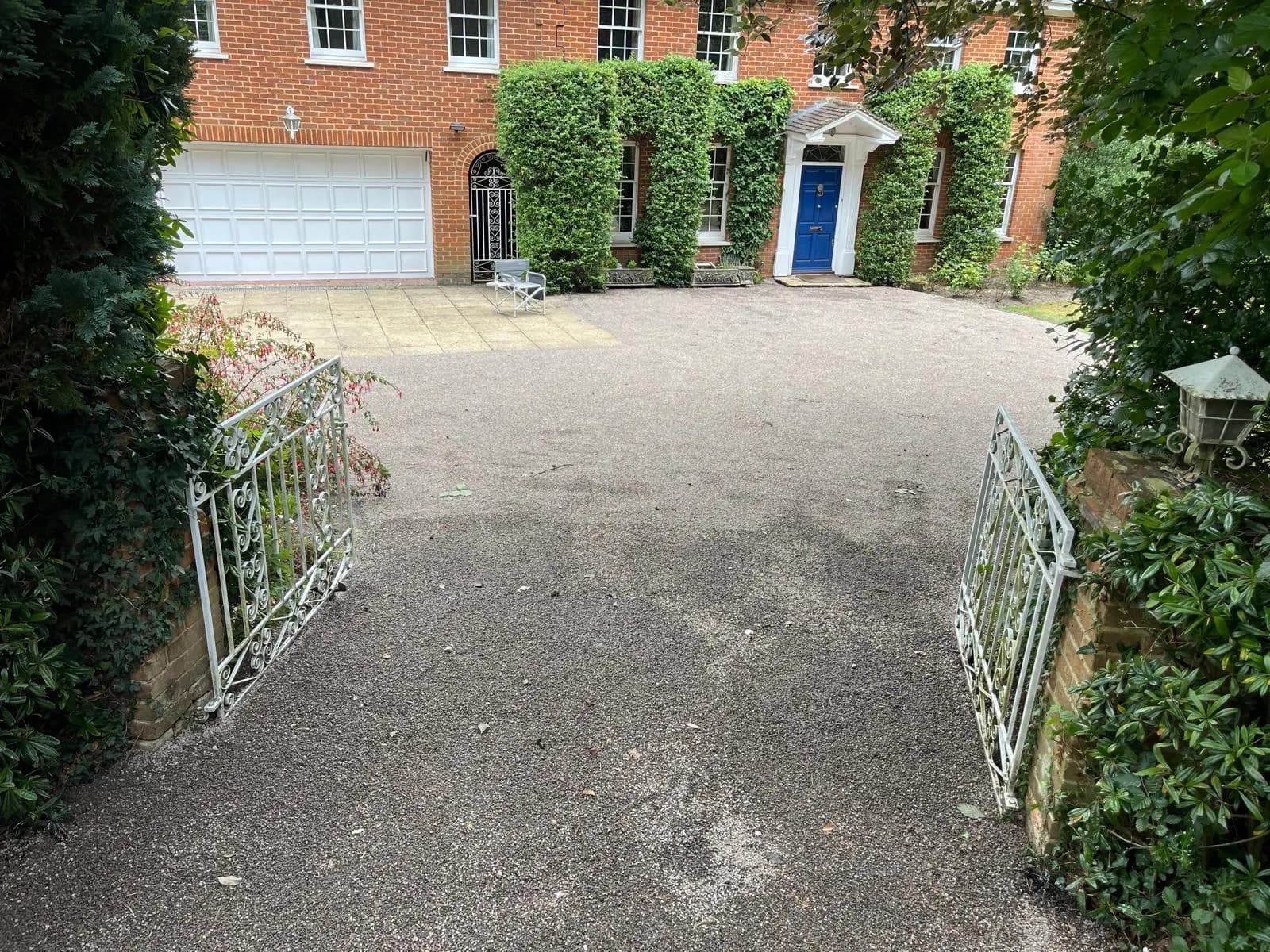
Surface dressing · Virginia Water
An area of tarmac had opened up and started to ravel. The owners wanted it sealed and refreshed without the cost of a full resurface.
The project, start to finish
Tap any photo to view it full size.
The brief
An area of tarmac had opened up and started to ravel. The owners wanted it sealed and refreshed without the cost of a full resurface.
The work
We swept and prepared the surface, sprayed the binder, then applied and rolled in the stone chippings to seal the surface and restore grip. Loose material was swept off once the dressing had taken.
The outcome
A sealed, refreshed surface with restored skid resistance — a cost-effective way to extend the life of the existing tarmac.
This was a surface dressing project in Virginia Water. We cover Surrey, UK for residential and commercial surfacing.
How we work
Surface dressing is the most cost-effective life-extension treatment available for an existing road or yard surface. Rather than removing and replacing the wearing course, a layer of bitumen emulsion is sprayed onto the existing surface and immediately covered with a single layer of pre-coated chippings, which are then rolled in. The result seals the existing surface against water ingress, restores surface texture, and — crucially — restores skid resistance to a surface that has been polished smooth by traffic. Done at the right time, it extends the serviceable life of a road by eight to twelve years.
The existing surface is swept thoroughly to remove loose grit, leaf debris, and surface contamination. Any isolated potholes or edge failures are filled and compacted before treatment — surface dressing cannot bridge structural defects, and the emulsion will not bond over loose material. Ironwork is either masked off or noted for re-setting if it is proud of the surface.
A polymer-modified bitumen emulsion is applied by a calibrated spray tanker at the design spread rate, typically 0.9 to 1.2 litres per square metre depending on the existing surface texture and absorption. Polymer modification improves early adhesion and reduces chipping loss — important in the first 24 to 48 hours before traffic embeds the aggregate. The spray rate is matched to the aggregate size being used so the chippings achieve the correct embedment depth.
Pre-coated chippings — usually 6mm, 10mm, or 14mm nominal size depending on the road type and speed — are spread immediately behind the spray tanker and rolled with a pneumatic-tyred roller to achieve 50–60% embedment. Over-rolling is as damaging as under-rolling: too much pressure crushes chippings and too little leaves them proud. Roller passes are managed to achieve consistent embedment across the full width.
The road is opened to slow-speed traffic shortly after rolling, typically at 20 mph or as advised by the operatives. Traffic action embeds the chippings further in the first few days. A follow-up sweep is carried out five to ten days after treatment to remove any loose chippings that have not embedded — this is an essential part of the process, not optional aftercare. We schedule this sweep as part of the contract and confirm the date with you before we leave.
Questions
On a sound base, well-applied surface dressing typically extends road life by eight to twelve years. The exact figure depends on traffic loading, the quality of the existing base, and whether the road is exposed to winter gritting or de-icing salts. Surface dressing does not reset the structural clock — if the base was marginal before treatment, the surface will deteriorate faster than it would on a sound base. We will give you an honest estimate of the likely service life at the survey stage.
Yes, there will be loose chippings for five to ten days after treatment until the follow-up sweep. During this period the road should be used at 20 mph or below. Fast-moving traffic in this window can throw chippings and cause minor paint damage to vehicles. We provide written notices for distribution to site users or residents, and we agree a speed advisory and follow-up sweep date before we leave. The sweep is part of our contract — it is not optional and we do not consider the job done until it has been carried out.
Potholes must be filled and allowed to cure before surface dressing is applied. The emulsion will not bond over a loose or compressible fill, and an unfilled pothole simply creates a void beneath the new surface that will re-open quickly. We fill isolated defects as part of the pre-treatment preparation, and if we find during the pre-sweep that the number of defects is higher than expected, we will discuss the additional cost with you before proceeding rather than applying the dressing over an inadequate base.
Surface dressing is less suited to car parks than to roads. The stop-start loading pattern in car parks — particularly at turning circles and outside parking bays — tends to pull at the chippings rather than rolling them in, which can result in premature chipping loss. For car parks, a thin AC wearing-course overlay is generally a better choice. We will tell you which treatment is appropriate for your surface type when we visit.
The best approach is to treat surface dressing as a scheduled intervention in a planned maintenance programme rather than a reactive one. A road that is surface-dressed when the wearing course first starts to age will cost considerably less over a 20-year period than one that is allowed to reach structural failure before any treatment is applied. We can advise on a simple inspection and maintenance programme for private road networks — noting current condition, expected treatment dates, and approximate costs — so that budget can be allocated in advance rather than in response to failure.
Tell us roughly what you'd like done. We'll come out and quote in writing.